
Thought Plains
Notes from a suburban prairie

I’m sorry it’s been so long. I feel the tug to write something for you all almost daily, but the few essay ideas I have are all directed towards guest essays for book promotion. But really, I just haven’t had many ideas lately.
Both boys are home with me full time during the summer, and ‘full’ is exactly the right word to describe this season of time: the dripping Oklahoma heat, air so thick you can lick it; the weed-choked backyard; fat tomatoes; sunlight like sizzling butter; the boys and their frenzied, rumbling bodies bouncing off of couches and pool walls like so many heated atoms. But, Lord, are they beautiful—their unselfconscious faces in profile, backlit by all that that sunny butter, red and golden hairs lit like halos. They fill my eyes, and I drink and drink that beauty through the mouth of my pupil, like I could never have enough. I won’t ever have enough.
Do all mothers feel this way? I think they must. But, in any case, the task of managing the heated atoms has consumed me. During naps and on Saturday mornings, I work (editing, pitching, writing—for others and myself). And in the margins between work and the kids, I clean the kitchen and pray. And in between those margins, I run. The margins regress forever, but happily. There’s never enough time for all the life that’s available to me (to us) but for the main things, there is always time.
Substack, I am sorry to say, is not one of the main things right now. I think it will be again, maybe when W is in school again. Or, maybe when R is old enough for preK. In the meantime, I won’t be offended if you unsubscribe. The last real essay I wrote was back in Feb. But on the upside, I’m not clogging your inbox!
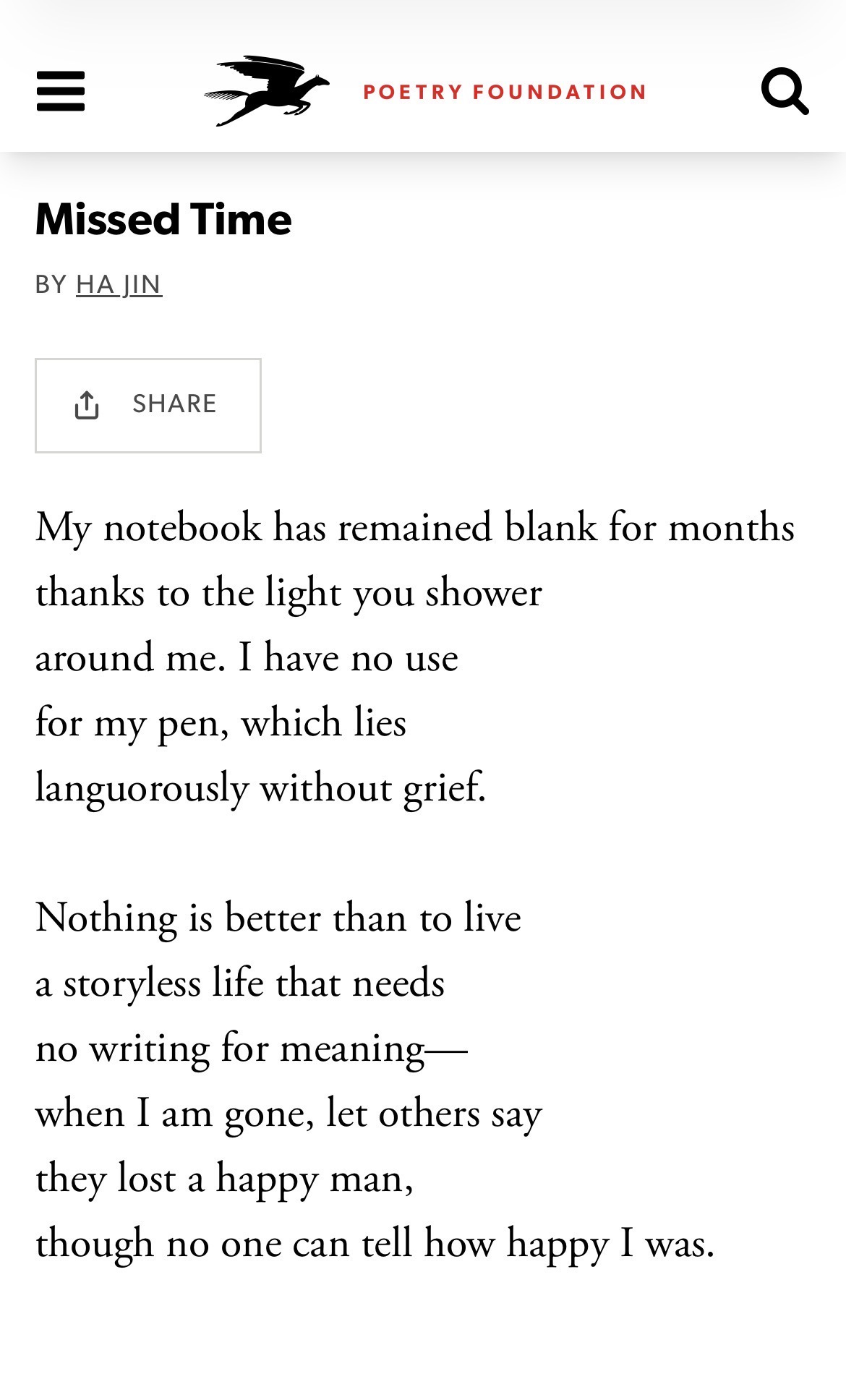
Here’s Ha Jin, who puts it all much more beautifully and clearly:
In lieu of an essay today, I have notes, which are really just spasms of thought that don’t leave me alone. I offer you my spasms:
I don’t think clothing reveals anything very interesting about a person’s interior life. I only say this because I recently read an essay in which the author argued, to the contrary, that orderly, beautiful, fashion-conscious clothing is often a sign of an ordered moral life. Such clothing, she claimed, conveys respect and more broadly the sense of being aware of oneself as a part of a group and not only an individual.
But, and maybe I am revealing more about myself here than anything else, I think that dressing nicely is almost always more about the self than it is about others. It’s one of the prominent ways we project our aspirational selves into the world. Can you see that I am beautiful? Academic? Thoughtfully minimalist? Rich? Or indifferent to how rich I am? Artistic (see: zaney glasses and scarves)? Anyway, I’m kind of like that. I dress plainly but am very anxious that people find me attractive, which is dumb because I am what I am.
But I don’t think we can assume much at all about the posture of a person towards their clothing just by looking at them. I wear jeans and tank tops and am sick with vanity. Another person might humbly wear beautifully tailored suits as a uniform.I am having a terrible time with my book. Well, not terrible exactly. I’m working with a bedrock of peace about the whole thing (thank you, Jesus). If we sell eight copies, fine. If we sell 30,000 copies, fine. I’m not in charge.
But I still have a job to do, and that job entails selling the book to media outlets for coverage. Guys, I am an awful sales person. I get clammy and confused just thinking about it. But it is one gazillion times worse trying to sell my own book!1
One of the problems is that I don’t really know what my book is about (Am I allowed to say that?). I mean, I can tell you what happens in the book—that in some ways it’s a story about addiction and military service and spiritual hunger. But I find that description so dissatisfying. None of those things, though they’re important to the story, is really what the book is about.
One of my favorite memoirs of recent memory is H is for Hawk by Helen Macdonald. On some level, you could say that her book is about grief and hawks, but that would be missing the whole point. What the book is really about is the particular consciousness of one woman, a consciousness so singular, vivid, and true that it becomes a whole world—and in a way, a universal world.
Troubled by my confusion, I recently picked up Vivian Gornick’s beautiful little book, The Situation and the Story, in which she claims that memoir is always really about the narrating persona, the distance between it and the events described ( a distance which I also believe is at least 50% of the art of memoir), and the consciousness that distance evokes.
Then, in the background, every time I write one of these infernal pitches, I hear Marilynne Robinson, who famously claims that the only real subject of literature is, again, human consciousness, human perception. I recognize myself as belonging to this camp of thought (whether or not my book successfully achieves it is another question). I want to sit across from each of the people I’m meant to pitch and have a conversation about the memory and art and the moral stakes of memoir and how a memoirist can achieve a clear, well-lit eye as she scans the past for broken images. I want to talk about how suffering damages perception and how it illuminates it. And I want to talk about God.
But how do I say all of this to, say, The Kenyon Review? Hello! I’d love to have my book reviewed in your (I start sweating as I search for the right adjective…beautiful? no. Important? no. I’ll come back to this later) journal. The book is about addiction, but it’s not really an addiction memoir. It’s about consciousness. Mine, I guess. But I don’t really know how to characterize that for you. Is it narcissistic to have written a book like this? I don’t think it’s a narcissistic book, but I’m not the best judge. In fact, that’s why I’m hoping you’ll review it. If I had to list its themes, I would say: fractured perception, desire, beauty, how mixed life is with death and death with life, and yes, addiction. And, yes, the Army. And, yes, sex. But it’s really about the eye and the mind and the lamp that lights each. You might just have to read the book. If you don’t end up reviewing, would you please send me an email telling me what the book is about?
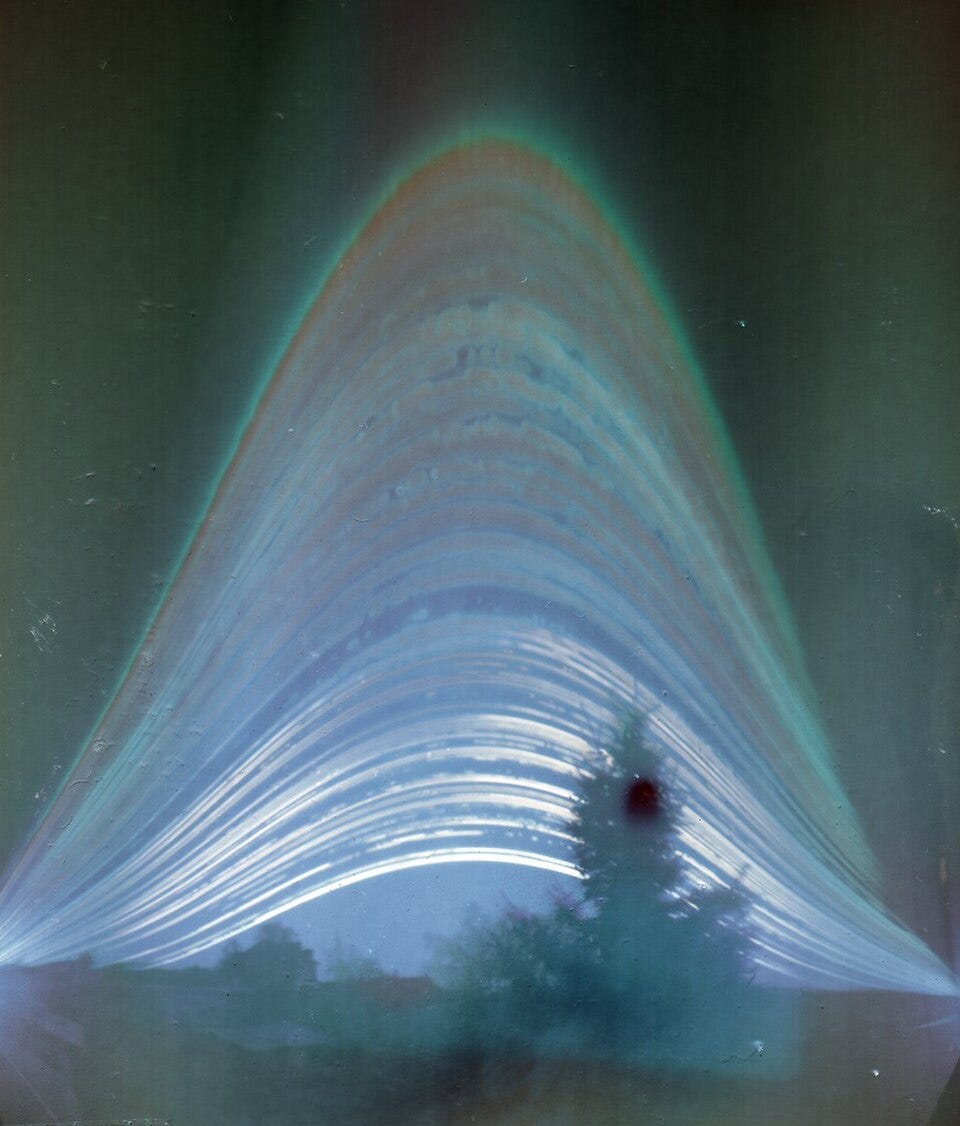
The other problem I have selling my book is that I don’t have that kind of relationship to it. It’s a product, for sure. But it isn’t useful. It isn’t going to solve anyone’s problems or help them live their best life. It doesn’t deal in advice or answers. What it is (this just occurred to me) is a solargraph, an image created by sunlight bent across opaque objects on light-sensitive paper. Maybe that’s what I’ll tell them. Please read my memoir, a solargraph exposed to light over thirty years.
If you have any better ideas, please send them to me.I made homemade ice cream with the boys last night. I have an old kitchen aid standing mixer and had purchased an ice cream-making attachment. But my mixer is so old the attachment didn’t work. So we stirred the cream and milk and sugar and vanilla and chocolate flakes for thirty minutes with out own brute strength. Well, the boys stirred for about 30 seconds but hovered with animated zeal over the bowl for nearly the entire time, occasionally dipping their sticky fingers into the cold.
I remembered being on my aunt’s Tennessee farm in the summer when I was eight or so. A whole group of us sat out on a wooden deck in the mellowing heat of evening. We were making ice cream. They let me add the rock salt and the fresh strawberries, and we took turns churning the large, wooden bucket. And afterwards, they scooped it, pink and cold, into blue, glazed bowls, and I was saturated in it—the fireflies and woods and laughter and that sweet, fatty cream, like heaven on my tongue.
Even though we didn’t have any fireflies last night, and even though the boys fought over who got to lick what and who would get their ice cream first, and even though the dining room window only looks out onto our pathetic vegetable garden and a lone Juniper tree, I wonder if it felt like heaven to them, too. I hope it did.
I almost always mistype ‘“my” as “me,” as in “But it is a gazillion times worse trying to sell me own book!” Which makes me sound like a pirate, and I wonder if my disobedient fingers are trying to tell me something. Should I start writing in the dialect of pirates? Am I really, deep-down a pirate who has been conditioned by society to forego the sea and wooden teeth? Something to think on.
I’m not The Kenyon Review but if I were that description would have sold me on your book.
May I add that your 2 darlings would look fabulous in pirate gear adjacent to their eye-patched mom in sailor garb!